
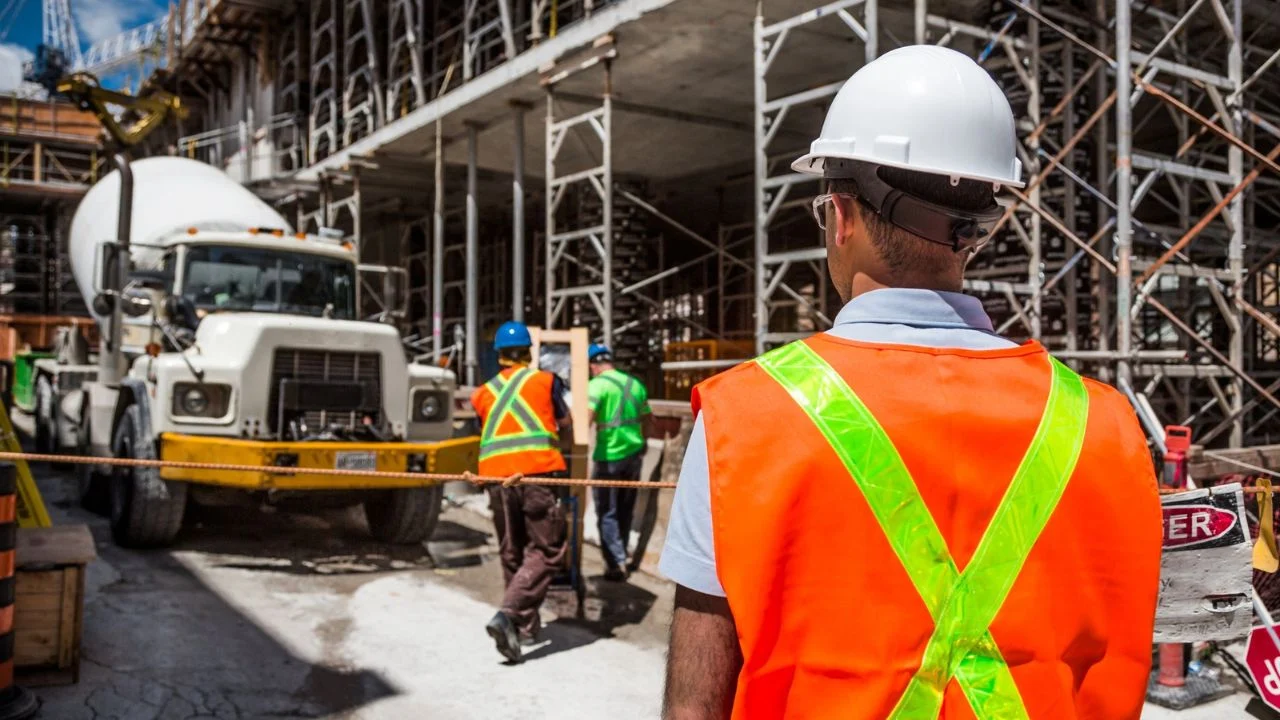
What changing market conditions mean for construction lenders—and why
consistent field reporting matters.
Construction rarely moves in a perfectly straight line. Scheduling changes, material
delays, weather, subcontractor availability, financing pressures, and shifting market
conditions can all affect project pacing.
And when construction activity slows, visibility into what is actually happening at the
project becomes even more important.
According to the U.S. Census Bureau, privately owned housing starts declined 12.4% in
July 2026 compared with June and were 13.5% below July 2025. Single-family housing
starts declined 9.9% from June. At the same time, single-family building permits
increased 2.5% for the month—an important reminder that new projects are still
entering the pipeline even as the pace of actual construction fluctuates.
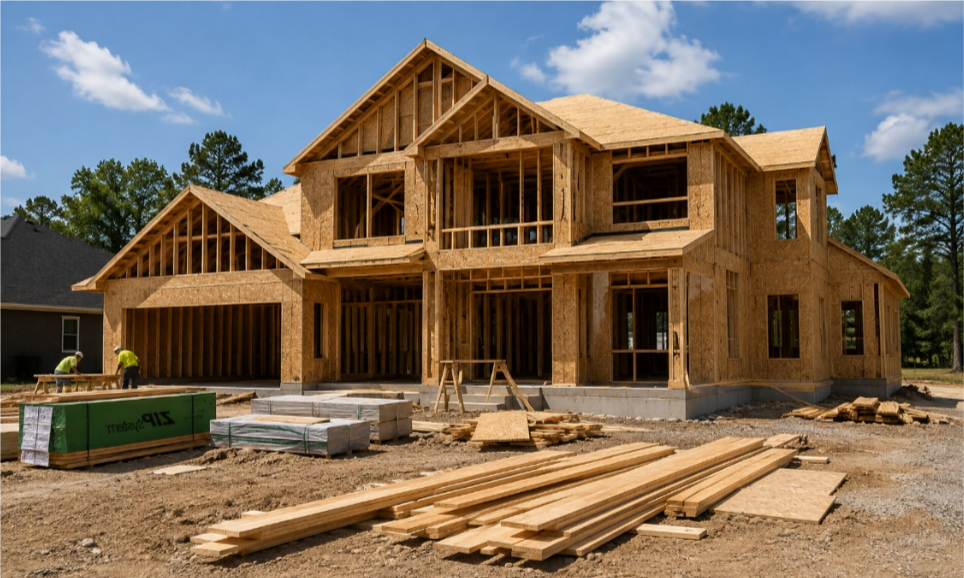
The Draw Request Tells One Part of the Story
Construction lending depends on information coming from several sources. Budgets,
draw requests, invoices, and project schedules help document the financial side of a
project.
A construction draw inspection adds something different: a current visual observation of
the property.
During an inspection, observable construction progress can be documented through
photographs, notes, materials observed on site, and estimated percentages of
completion.
That information gives the lender another point of reference when reviewing a draw.
The inspection does not replace the lender’s underwriting, funding decisions, or project
management. Instead, it provides independent field information that can help the lender
compare reported progress with conditions observed at the property.
When Progress Changes, Consistency Matters
A project does not necessarily indicate a problem simply because progress slows
between inspections.
There may be legitimate reasons for limited visible change.
However, consistent inspection reporting allows lenders to recognize patterns over time.
For example, consecutive inspections may show that certain areas remain incomplete,
materials are present but have not yet been installed, or observable progress has
changed very little since the previous visit.
One inspection provides a snapshot.
A consistent series of inspections helps tell the story of the project.
That historical perspective can become especially valuable when construction timelines
extend, or funding decisions require additional review.
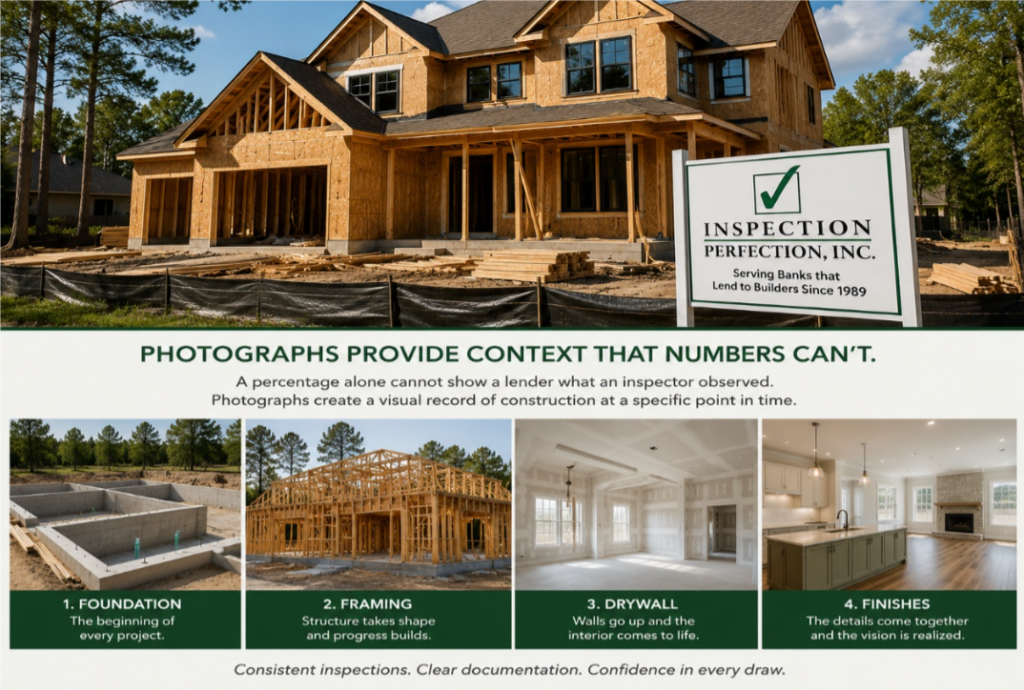
Photographs Provide Context That Numbers Can’t
A percentage alone cannot show a lender what an inspector observed.
Photographs can.
They provide visual documentation of construction at a particular point in time—from
foundation and framing through mechanical rough-ins, drywall, cabinetry and finishes.
For lenders who may be located miles—or even states—away from the property, those
photographs create an important connection between the construction loan file and the
physical project.
That is why clear documentation matters.
Visibility Supports Better Questions
The purpose of a draw inspection is not to determine whether a project is successful or
unsuccessful. It is to objectively document observable conditions at the time of
inspection.
When those conditions differ from what a lender expected to see, the inspection can
provide useful information for further review and help the lender consider questions
such as:
- Has construction progressed since the previous inspection?
- Are materials reported for the project observable on site?
- Do the percentages of completion appear consistent with the work visible at the property?
- Are budget categories showing little observable progress over multiple inspections?
Those questions ultimately belong to the lender. Reliable field reporting simply provides
the information needed to ask them.
Your Eyes in the Field Since 1989
Markets change. Construction cycles change. Financing conditions change.
The need for accurate, timely information from the field does not.
Since 1989, Inspection Perfection, Inc. has worked with banks and construction lenders
to provide independent construction draw inspection reporting and photographic
documentation throughout the life of a project.
Whether construction is moving rapidly or progressing more slowly than anticipated, our
role remains the same:
Observe. Document, Report
Because when condition change, visibility matters.
Inspection Perfection, Inc.
Serving Banks that Lend to Builders Since 1989